Lion's Mane Extract (10:1)
1,000mg
74% of supplements contain less than 5% active compounds. We fix that. DNA-verified, dual-extracted, and third-party tested. Science, not hype.
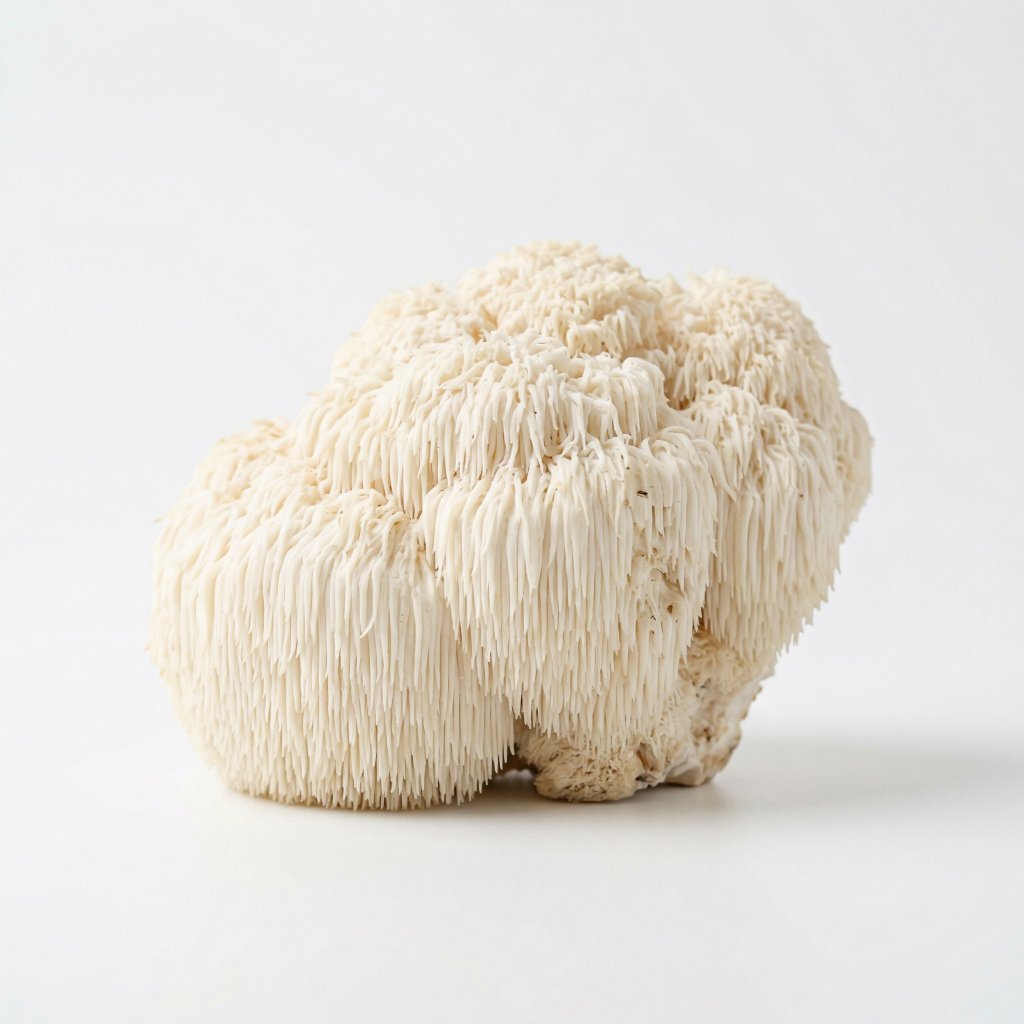
Fig. 1 — Hericium erinaceus (Lion's Mane) cultivated under controlled conditions. 100% fruiting body, zero mycelium substrate.
The fruiting body is the actual mushroom — the visible, above-ground structure that produces the bioactive compounds. Hericenones and erinacines, the two compound classes studied for neurological activity, are found primarily in the fruiting body. Most commercial products use mycelium — the root structure grown on grain substrate. Mycelium-on-grain products are cheaper to produce but carry significant starch from the grain itself, diluting the active compound concentration.
Our Hericium erinaceus comes from controlled cultivation environments where growing conditions — temperature, humidity, substrate composition and harvest timing — are set for maximum beta-glucan content. We do not wild-harvest. Controlled cultivation keeps batches consistent and keeps environmental pollutants out.
Extraction pipeline
Raw Fruiting Body
10kg input
Hot Water Extraction
Beta-glucans · Polysaccharides
Alcohol Extraction
Hericenones · Erinacines · Terpenoids
Combined Extract
Full spectrum
10:1 Concentration
Yield: 1kg
Final Powder
>30% beta-glucans verified
Raw Fruiting Body
10kg inputHot Water Extraction
Beta-glucans · PolysaccharidesAlcohol Extraction
Hericenones · Erinacines · TerpenoidsCombined Extract
Full spectrum10:1 Concentration
Yield: 1kgFinal Powder
>30% beta-glucans verified10:1
Concentration ratio
35–45%
Typical beta-glucans
2×
Extraction methods
Fig. 2 — Dual extraction process. Hot water and alcohol extraction unlock the complete spectrum of bioactive compounds from the fruiting body.
A single extraction method captures only part of the compound spectrum. Hot water extraction pulls water-soluble compounds (beta-glucans, polysaccharides). Alcohol extraction pulls alcohol-soluble compounds (hericenones, erinacines, terpenoids). We use both methods sequentially, then combine the extracts — the same dual extraction methodology used in the peer-reviewed studies below.
The industry standard is 1:1 — one kilo of raw material becomes one kilo of powder. That's ground-up mushroom (or grain) with no concentration step. We concentrate at 10:1: ten kilos of raw fruiting body produce one kilo of extract powder. That's why we can guarantee over 30% beta-glucan content — our batches typically test at 35–45% — while 74% of competitors test below 5%.
DNA barcoding process
ITS region sequencing — performed on tested production samples
01
Extract from a tested production sample
02
Isolate fungal DNA from sample
03
Amplify ITS barcode region
04
Read the species identifier sequence
05
Match against NCBI reference database
06
Hericium erinaceus — authenticated
Species: Hericium erinaceus
ITS match confidence: 99.8% · GenBank accession confirmed
Fig. 3 — DNA barcoding confirmation. Tested samples are sequenced against the NCBI GenBank reference database to verify species identity.
DNA barcoding is the gold standard for species authentication in mycology. We extract DNA from tested production samples, amplify the ITS (Internal Transcribed Spacer) region — the universal barcode marker for fungi — and compare the sequence against the NCBI GenBank database. This confirms the extract contains authentic Hericium erinaceus and not cheaper substitute species.
Published analyses have documented significant species substitution in commercial mushroom supplements — products labelled as Lion's Mane containing different species entirely. DNA barcoding is the only reliable way to catch it. Chemical tests for beta-glucans cannot distinguish between species. DNA verification is expensive, and no regulation requires it — so most brands skip it. We don't.
Metric
Typical brand
Solve Labs
Source
Mycelium on grain
100% Fruiting Body
Extract Ratio
1:1
10:1
Beta-Glucans
<5%
>30%
DNA Testing
None
Every batch
Fillers
Starch, grain, maltodextrin
Zero
CoA
Rarely
Every batch — on request
74% of brands tested score 0 of 4 on this scorecard.
Source: independent market analysis, 2023.
The test library
The reports behind the range. Beta-glucan content is assayed separately for every ingredient. Heavy metals, microbiology and pesticide residues run as one combined contaminant panel, and species identity as one DNA report — both covering the whole range.
Beta-glucan content
One report per ingredientLion's Mane
Hericium erinaceusBeta-glucan assay · quantified %Cordyceps
Cordyceps militarisBeta-glucan assay · quantified %Reishi
Ganoderma lucidumBeta-glucan assay · quantified %Chaga
Inonotus obliquusBeta-glucan assay · quantified %Contaminant panel
One report · whole rangeHeavy metals, microbiology & pesticides
Arsenic · cadmium · lead · mercury — total viable count · yeast · mould — pesticide residue screenSpecies identity
One report · whole rangeDNA barcoding
ITS region sequencing · matched against NCBI GenBankTested under UK and EU protocols by independent laboratories · Every production batch · The certificate for your batch — on request
Every batch of extract undergoes independent third-party testing for beta-glucan content, heavy metals (arsenic, cadmium, lead, mercury), microbial contamination and pesticide residues. We test under both UK and EU protocols. No skip-lot testing. Every batch, every time.
Independent analysis of the Lion's Mane supplement market found 74% of products testing below 5% beta-glucans. Many contained grain starch that inflates apparent polysaccharide counts in non-specific tests. Others contained species different from what was labelled. There is no mandatory DNA verification, no mandatory beta-glucan minimum, and no mandatory filler disclosure. That gap is why we test the way we do.
Supplement Facts
Serving Size: 2 Capsules
Servings Per Container: 30
Amount Per Serving
% Daily Value
Lion's Mane Extract (10:1)
1,000mg
Beta-Glucans (polysaccharides)
≥30% *Typical batch result
35–45% *Extract equivalent (raw fruiting body)
10,000mg ** Daily Value not established
Batch CoA available on request
Fig. 4 — The Solve Labs supplement facts panel. Every active compound disclosed. No proprietary blends. No hidden ingredients.
"Proprietary blend" labels legally allow brands to list ingredients without disclosing amounts. We don't use them. Every product shows the full breakdown — extract weight, ratio, beta-glucan content — on the label and on the site. If it's in the extract, it's on the label.
Every batch has a certificate of analysis covering species verification (DNA), beta-glucan content, heavy metals and microbial results. Bought a jar and want the numbers behind it? Contact us and we'll send you the CoA for your batch.
These species have been studied for years. This is a selection of that published literature — the design, the journal, the source. It describes the research, not our products. Read it yourself.
A randomised, double-blind, placebo-controlled trial of Hericium erinaceus (Lion's Mane).
A double-blind, placebo-controlled pilot trial of Lion's Mane in healthy young adults.
A human study of oral Hericium erinaceus supplementation.
A placebo-controlled trial of Hericium erinaceus — a reported null result.
A systematic review of Hericium erinaceus as a supplement.
A randomised controlled trial of Ganoderma lucidum (Reishi).
A GRADE-assessed review of Ganoderma lucidum (Reishi) in human health.
A systematic review and meta-analysis of Ganoderma lucidum (Reishi).
A laboratory evaluation of beta-glucans from Ganoderma lucidum (Reishi).
A double-blind, placebo-controlled trial of Cordyceps (Cs-4) in healthy older adults.
A randomised controlled trial of Cordyceps militaris in healthy adults.
A review of edible mushrooms and beta-glucans in human health.
A review of medicinal mushrooms and their bioactive components.
Neutral summaries of independent published research into these mushroom species — not claims about Solve Labs products, and not medical advice. Food supplements are not a substitute for a varied, balanced diet or a healthy lifestyle.
Choose your protocol.
The morning jar
£30 · £24/mo with subscription
Shop →
The midday jar
£30 · £24/mo with subscription
Shop →
The evening jar
£30 · £24/mo with subscription
Shop →
60-day guarantee · Free UK delivery over £50 · Cancel anytime